By: Joel Ross
Political campaigns have transformed dramatically over the past three decades. Fundraising went digital. Advertising became data-driven. Voter outreach went mobile-first. Campaigns now run on sophisticated analytics platforms, behavioral targeting, SMS engagement, and highly optimized digital fundraising systems built around one thing: measurable participation.
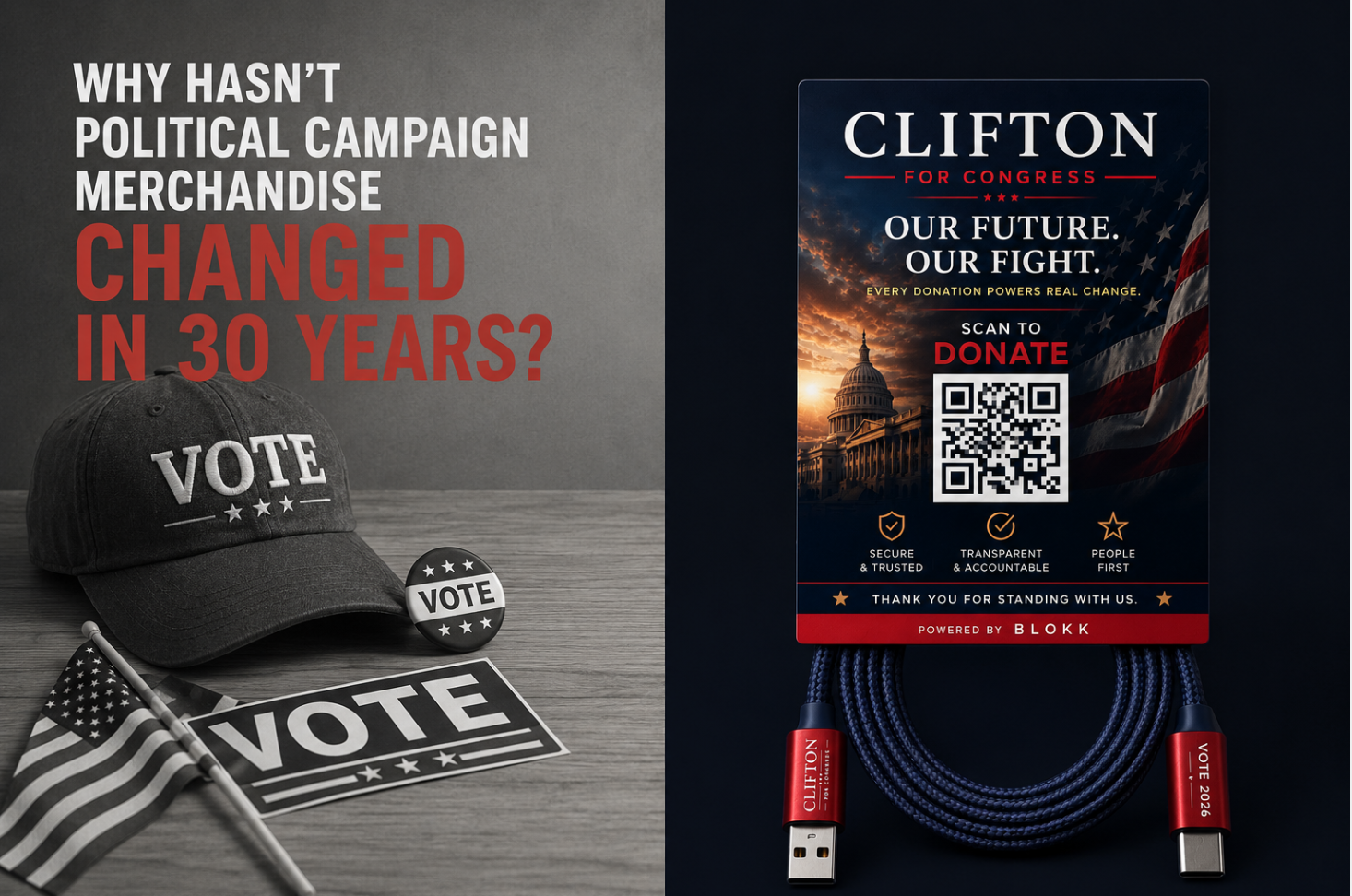
And yet, despite all of that innovation, one category has barely evolved at all: campaign merchandise.
Hats, shirts, yard signs, buttons, bumper stickers, tote bags. The designs change. The slogans evolve. The branding gets more polished. But the underlying philosophy has stayed remarkably consistent for decades. Put the candidate’s name and message into the physical world. Create visibility. Repeat.
So why hasn’t campaign merchandise changed in 30 years?
The answer has less to do with merchandise itself and more to do with how campaigns have historically thought about physical media. For most of modern political history, merch was treated as promotional branding and nothing more. That made perfect sense in an era dominated by television, print, radio, and direct mail, where broad awareness and repeated exposure were the whole game.
But the digital era fundamentally changed what campaigns are actually trying to do.
A model built for a different era
Modern campaigns don’t just want voters to recognize a candidate’s name — they want supporters to donate, volunteer, register, attend events, and participate digitally throughout a long election cycle. That shift transformed nearly every aspect of campaign strategy. Except, somehow, the merchandise.
The result is a growing disconnect that’s becoming harder to ignore. Digital campaign infrastructure has evolved rapidly and continuously. Physical campaign infrastructure largely hasn’t moved. And the reason, when you look closely, is pretty straightforward: traditional campaign merchandise was built for a pre-smartphone world. A pre-QR world. An era before campaigns became obsessed with attribution, conversion, and measurable action.
A shirt created visibility. A yard sign created presence. A hat created recognition. But the interaction stopped there. There was no bridge between the physical product and the campaign’s digital ecosystem. No way to measure whether someone engaged, participated, or took any action at all because of it. For a long time, that was fine — visibility was considered enough on its own.
It’s becoming less fine.
The attention problem
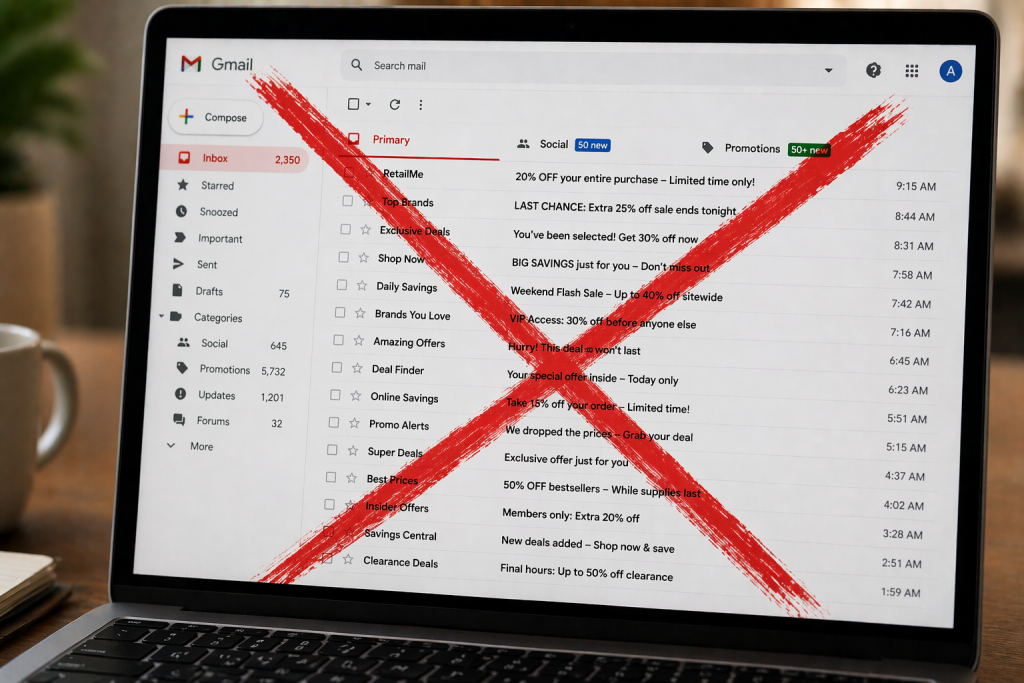
Today’s voters are overwhelmed with political messaging. Every election cycle brings more digital ads, more fundraising emails, more social content, more texts — and more competition for the same finite pool of attention. Interruption-based outreach keeps getting more crowded and more expensive, and campaigns aren’t just competing against opposing candidates anymore. They’re up against the entire digital attention economy.
That pressure is exposing one of the quiet limitations of traditional political merchandise: it was designed for exposure, not participation. And those are very different things.
What useful products do differently
Most campaign merchandise asks supporters to advertise on the campaign’s behalf. Useful products provide value first. That’s a fundamentally different emotional dynamic, and it matters more than it might seem at first glance.
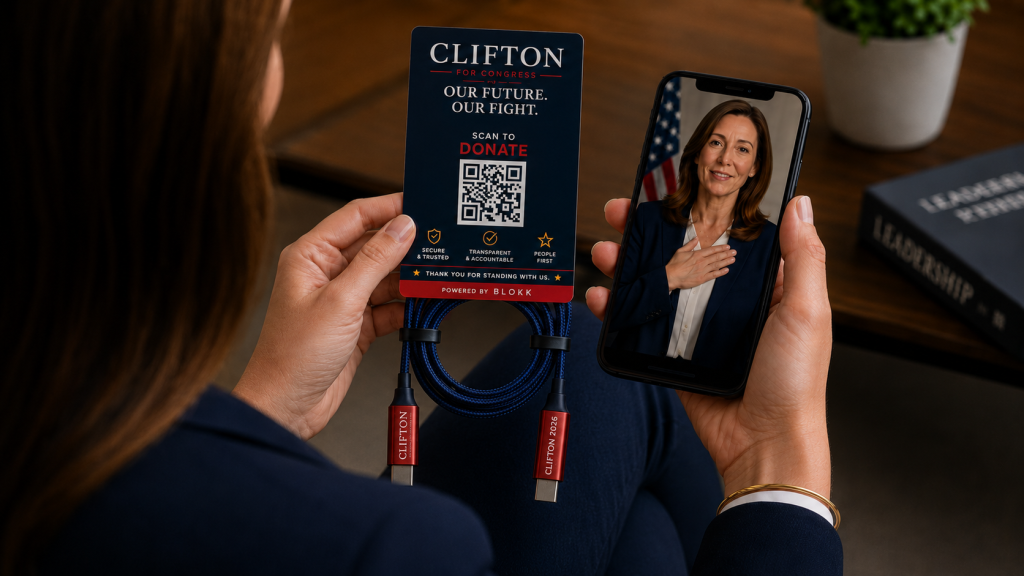
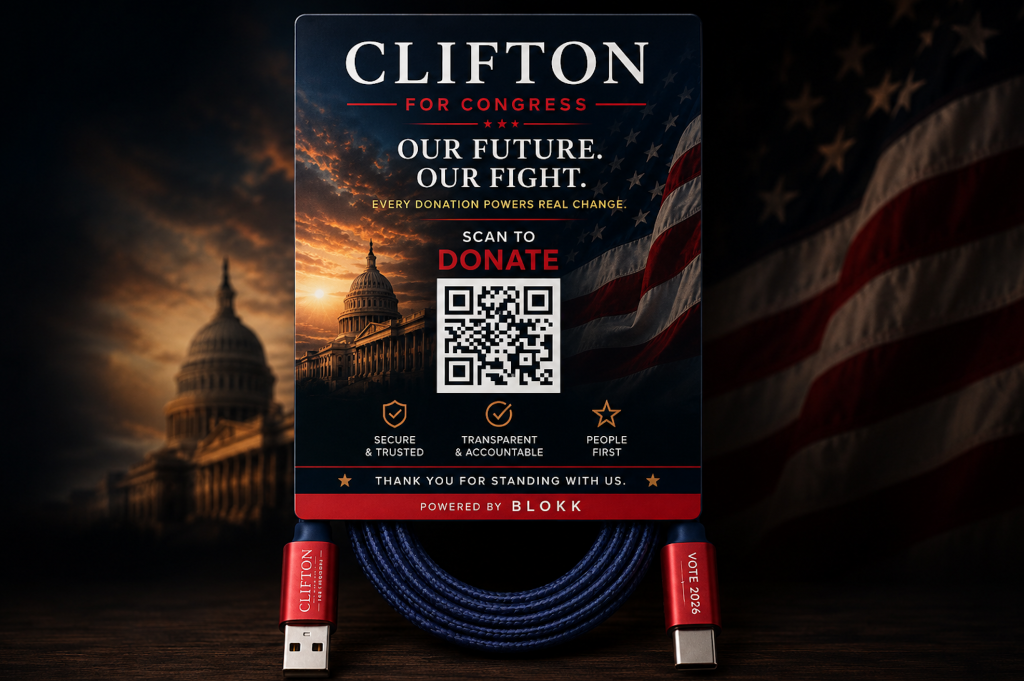
Take a charging cable. It’s not a glamorous object, but it solves a real and recurring problem. People rely on their phones for communication, navigation, payments, and just about everything else. A cable that lives in a backpack, a car, on a desk, or on a nightstand gets used constantly — not because someone is obligated to engage with it, but because it’s genuinely helpful. Unlike a bumper sticker or a button, a useful product tends to stay in circulation for months or even years, creating repeated voluntary interaction with the campaign brand over time.
That’s worth sitting with for a moment. Repeated voluntary engagement is one of the most powerful forms of brand reinforcement that exists. Behavioral psychology has studied the principle of reciprocity for decades: when people receive something genuinely useful, they tend to develop a stronger emotional connection to the source that provided it. In a political environment where trust and attention are both hard to earn, that’s not a small thing.
Advertising interrupts. Utility helps. Those are fundamentally different experiences.
Merchandise as engagement infrastructure
Here’s where the concept gets more interesting. A branded product paired with a Scan-to-Act activation doesn’t just create goodwill — it creates a direct bridge between the physical object and the campaign’s digital ecosystem. Supporters can donate, volunteer, register for events, or join an email list directly through the product. The merchandise stops being static promotional material and starts functioning as connected engagement infrastructure.
That’s a meaningful philosophical shift. Physical campaign materials have historically existed entirely outside a campaign’s measurable systems. But they don’t have to anymore. The physical object itself becomes a gateway into measurable digital participation — and that aligns well with where modern campaigns are already headed, especially as grassroots fundraising and broad supporter activation become increasingly central to how campaigns build momentum.
Politics has followed the same trajectory as the rest of modern marketing in almost every other area. Campaigns embraced data, mobile, digital attribution, and first-party audience strategies. The physical side of campaigning is simply the last piece that hasn’t caught up yet.
Fundraising evolved. Advertising evolved. Outreach evolved. Voter engagement evolved.
Campaign merchandise largely didn’t. But that may finally be starting to change.