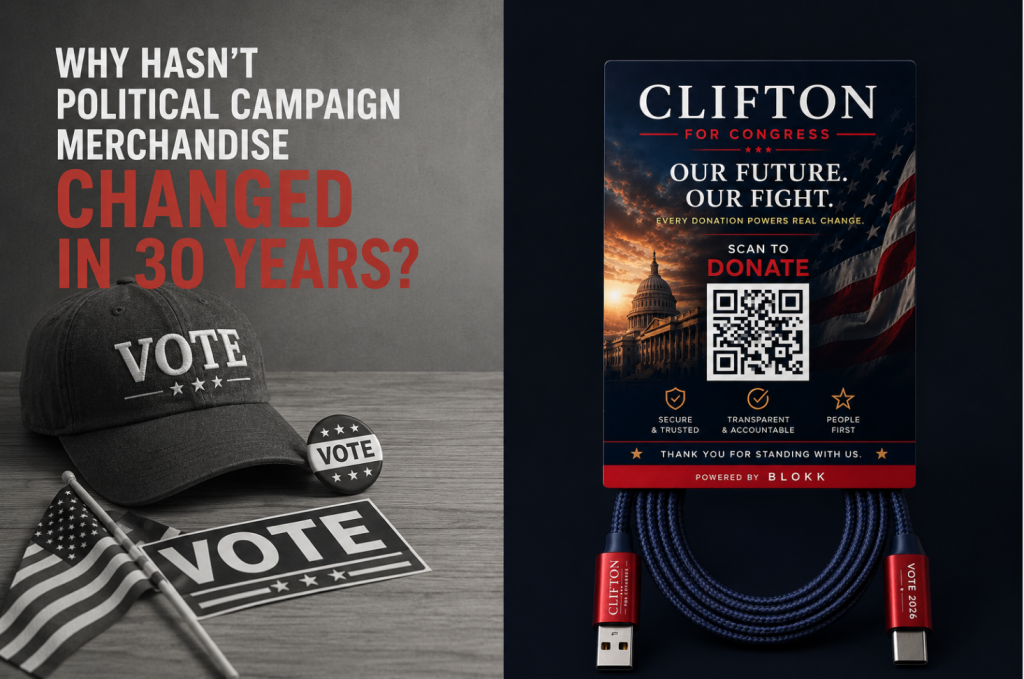
For the past 15 years, agencies have operated inside the same ecosystem—Google, Meta, programmatic, CTV, paid social. The tools evolved, the dashboards improved, and targeting became more sophisticated, but the underlying model never changed. Agencies buy impressions, optimize performance, and report results. That system worked when access to these channels created an advantage. Today, it doesn’t.
The channels still dominate global ad spend, but they’ve become fully commoditized. Every agency runs paid social. Every agency buys search. Every agency experiments with CTV. Every agency now uses AI. When everyone has access to the same tools, inventory, and data, differentiation disappears. What remains is execution—and execution alone is not defensible. And when execution becomes the only lever, margins compress, pricing gets pressured, and agencies are forced into a race they can’t sustainably win.
At the same time, clients are evolving. Brands no longer want to rent customers from platforms—they want to own the relationship. Privacy changes, rising acquisition costs, and platform dependency have exposed a structural weakness in digital-first strategies. Companies want first-party data, direct engagement, and measurable outcomes tied to real revenue—not modeled assumptions. That shift puts agencies in a difficult position. They’re being asked to deliver stronger results inside systems they don’t control.
The Structural Problem Agencies Are Facing
Agencies are not failing—they’re operating inside a model that is no longer built for differentiation. The pressure is systemic, not tactical.
- Digital channels are saturated, with rising costs and diminishing uniqueness
- Platforms control access, pricing, and visibility—agencies operate within their rules
- Attribution is increasingly probabilistic, making true ROI harder to prove
- Clients expect lower CAC and higher accountability at the same time
This creates a fundamental mismatch between what agencies are being asked to deliver and the tools they’re using to deliver it.
Most agencies respond to this pressure the same way—by trying to optimize harder. Better creative, better targeting, better bidding strategies. But optimization inside a commoditized system doesn’t create advantage. It creates marginal improvement. Every agency is optimizing. Every platform is automating. Every tool is becoming more accessible. The result is a crowded field competing for incremental gains instead of meaningful differentiation.
What agencies actually need is not better execution. They need a new, ownable channel—something that isn’t subject to auction dynamics, platform rules, or algorithm changes. They need a way to create value that cannot be easily replicated.
The Miss: Why Optimization Alone Won’t Save You
The industry has over-rotated on performance tuning instead of structural advantage. That’s the core issue.
- Optimization improves efficiency, but doesn’t create uniqueness
- AI is rapidly standardizing execution across agencies
- Performance gains are incremental, not transformative
- Competing inside the same channels guarantees diminishing returns
Without ownership, agencies are always competing—not controlling.
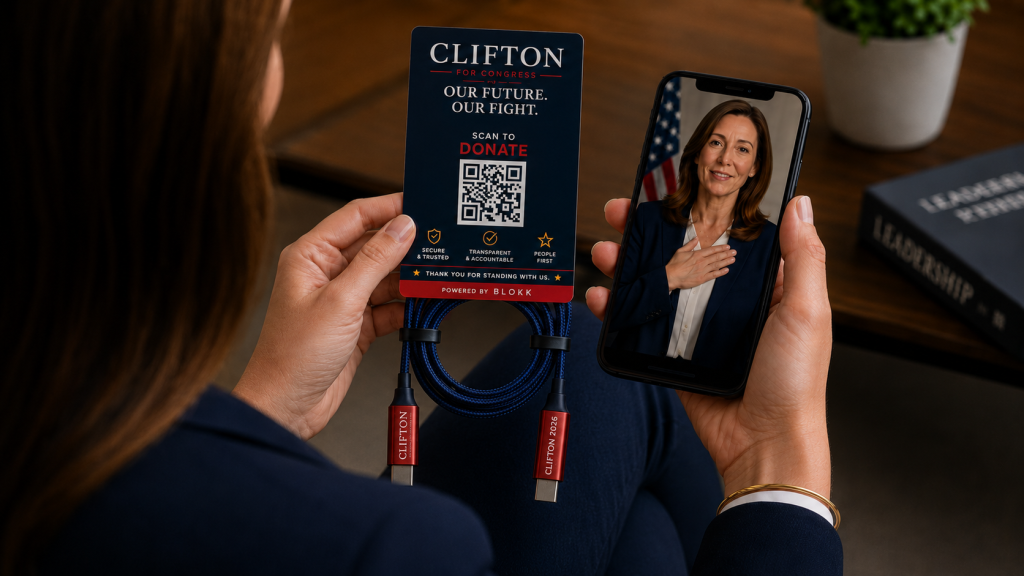
This is where a new model begins to emerge—one that doesn’t replace digital, but complements it in a fundamentally different way. Every day, millions of high-value customer moments happen in the physical world. People check into hotels, sit in waiting rooms, stand at service counters, and engage in real-world environments where attention is naturally high and distraction is low. These moments are structured, predictable, and incredibly valuable—but from a media perspective, they are almost entirely unclaimed.
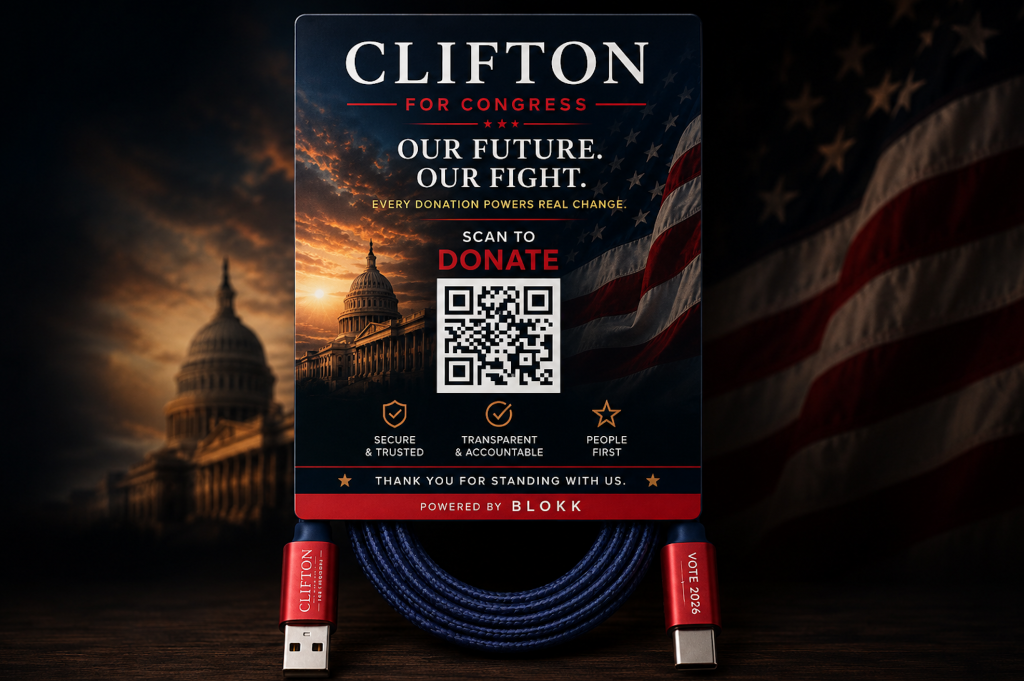
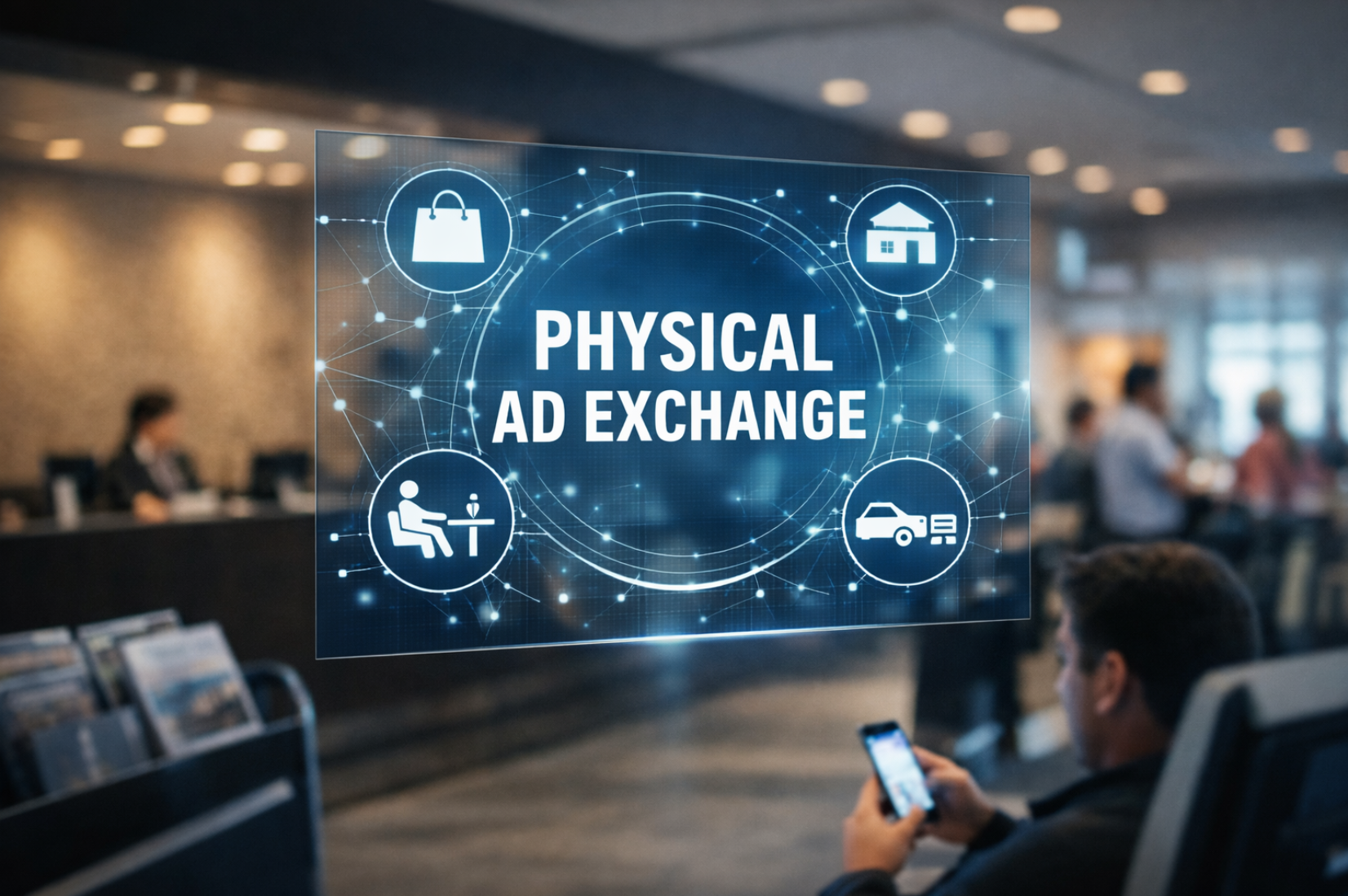
A Physical Ad Exchange turns those moments into media inventory. Not impressions competing for attention, but moments that command it. When a customer is physically present in an environment—waiting, checking in, or interacting—they are not scrolling past content. They are engaged in a real-world experience with no competing ads and no algorithm controlling visibility. That level of attention is rare, and it represents an entirely different category of media.
The Opportunity: Turning Real-World Moments Into Owned Media
This is where agencies can create a true competitive advantage—by owning distribution instead of renting it.
- Physical environments become structured media channels
- Customer interactions become activation points
- Attention is captured without competition or bidding
- Campaigns are built around moments, not impressions
This is not another media buy. It’s a new layer of infrastructure.
For agencies, the implications are significant. Instead of reselling media, they can own the channel itself. Instead of competing in auctions, they can control access and define pricing. Instead of reporting on modeled performance, they can tie real-world interactions to verifiable digital outcomes. This shifts the agency from execution to ownership—from service provider to infrastructure layer. Think how this could positively affect hospitality, travel, and transportation industries today…. it could be potentially seismic.
It also changes how agencies package and monetize their work. Physical-to-digital activation can be sold as a recurring program tied to locations, customer touchpoints, and measurable outcomes. It becomes a new billable channel that clients don’t already have—and one that competitors cannot easily replicate.
The Shift: From Buying Impressions to Owning Moments
This is the inflection point. The agencies that understand this shift early will separate themselves quickly.
- Move from renting audiences → owning access to attention
- Move from impressions → interactions and outcomes
- Move from platform dependency → channel control
- Move from optimization → differentiation
Ownership is the new advantage.
The agency industry is entering a phase where execution is no longer the moat. Tools are improving, automation is accelerating, and AI is lowering the barrier to entry. Clients are questioning value, and competition is increasing across every vertical. In that environment, the agencies that win will not be the ones who execute slightly better. They will be the ones who control something others cannot.
Right now, the opportunity to build that control is wide open. Most agencies are still focused on improving performance within existing systems. But once this model becomes widely understood—once agencies begin building physical-to-digital infrastructure and clients start asking for it—the window will close.
Every agency today buys impressions. The next generation will own moments. And the ones who move first will not just win more business—they will redefine what an agency actually is.