Take a second and think about the last time you actually scanned a QR code.
Not the last time you saw one—the last time you pulled out your phone, opened your camera, and followed through. It probably wasn’t that long ago. But now ask yourself something more honest: how many QR codes did you ignore today?
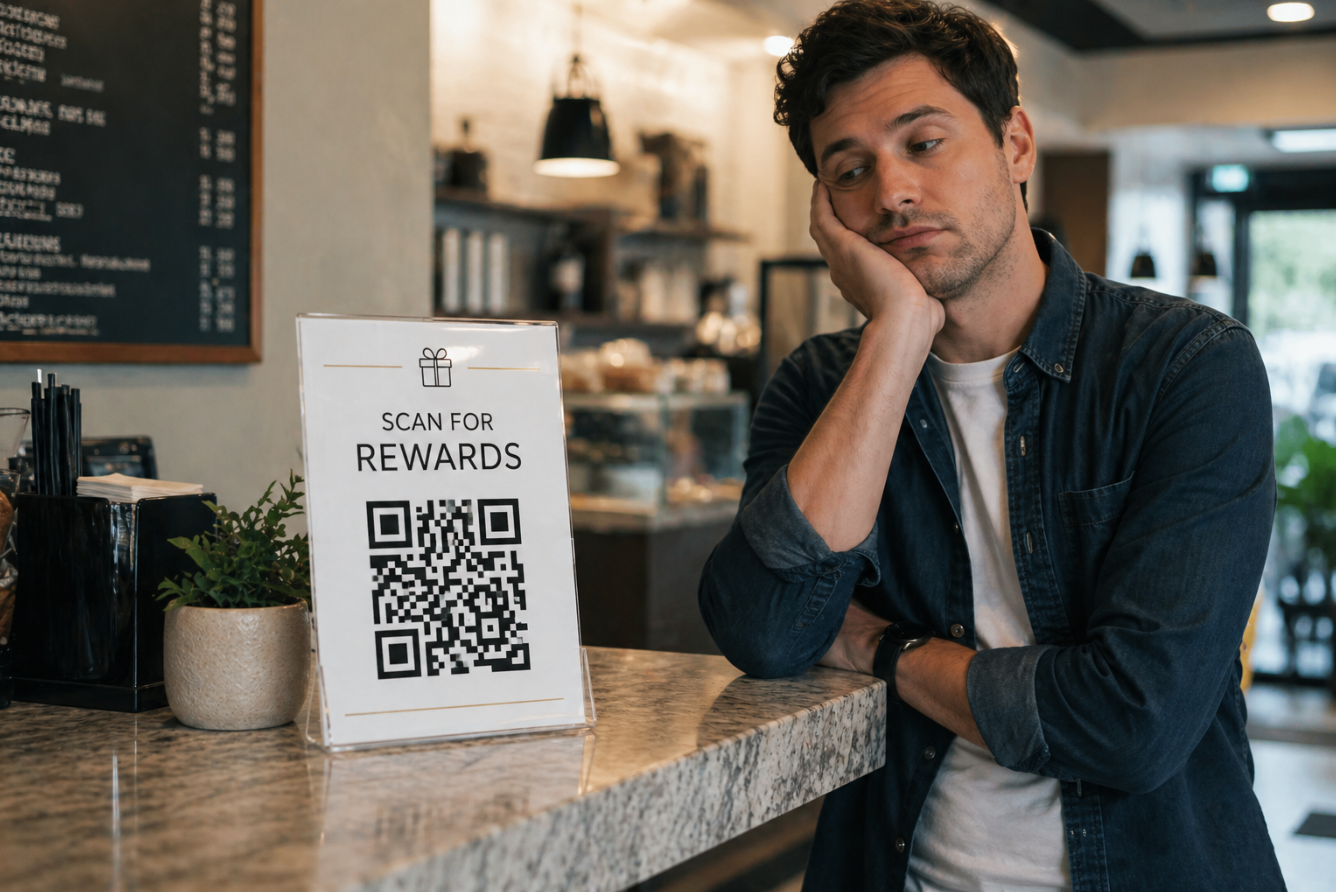
They were everywhere. On a receipt, on a table, at a checkout counter, maybe on a wall while you were waiting somewhere. You saw them. You recognized them. You knew exactly what they were asking you to do. And you didn’t scan.
Not because you couldn’t. Because you didn’t want to.
That’s the part most businesses get wrong.
QR codes aren’t failing because people don’t understand them. That problem disappeared years ago. Today, there’s no confusion, no learning curve, no friction in the technology itself. Everyone knows how to scan. Everyone has the ability to do it in seconds. And yet, most QR codes still get ignored.
The issue isn’t awareness. It’s motivation.
Most QR codes are built around a simple assumption: if you make something easy enough, people will do it. So brands place a code in front of a customer and pair it with a generic prompt—“scan to learn more,” “scan to join,” “scan to download.” On paper, it feels logical. In reality, it’s asking someone to stop what they’re doing, shift their attention, and take an action for no immediate reason.
That’s not a small ask. It’s a behavioral leap.
Every time someone sees a QR code, their brain runs a quick calculation. What am I getting? Is it worth it? Do I need this right now? Can this wait? Most of the time, the answer is some version of “not right now.” And in a world where attention is constantly pulled in a dozen directions, “not right now” usually becomes “never.”
This is where most strategies quietly fall apart.
Because the assumption isn’t just that people will scan—it’s that they should scan. That the presence of the code itself is enough. But in reality, attention isn’t given like that. It’s earned. And most QR codes haven’t done anything to earn it.
Think about where they usually show up. Receipts handed over after the transaction is already finished. Tables where people are mid-conversation. Walls people walk past without thinking. Checkout counters where the only goal is to pay and leave. In most of these moments, the customer is distracted, in a hurry, or mentally checked out. And yet, that’s when brands ask for engagement.
There’s a disconnect between the ask and the moment.
What makes this more frustrating is that the intent is often there. Customers aren’t opposed to joining a rewards program, learning more about a brand, or getting something of value. But intent alone doesn’t drive action. Timing does. And most QR codes show up at the wrong time, in the wrong context, with no real reason to act.
At its core, a scan isn’t just a quick tap. It’s a decision.
And decisions need a reason.
That reason is almost always tied to one of three things: need, value, or immediate relevance. When someone needs something—like a menu, Wi-Fi, or help—scanning becomes obvious. When there’s clear value—something useful, tangible, or beneficial right now—people engage. And when something is tied directly to the moment they’re in, curiosity can take over.
But outside of those conditions, the default behavior is to ignore.
That’s why so many QR code strategies underperform. Not because the technology is flawed, but because the moment is.
The shift that changes everything is surprisingly simple. Instead of asking, “How do we get more scans?” the better question is, “Why would someone act right now?”
That question forces a different kind of thinking. It moves you away from placing QR codes wherever there’s space and toward placing them where there’s context. It shifts the focus from visibility to relevance, from asking to earning.
And this is where a different approach starts to emerge.
Because when you stop treating the QR code as the starting point and start thinking about the moment first, you begin to see something most strategies miss. The highest-performing interactions don’t happen when you ask for attention. They happen when you show up with value at the exact moment someone needs it.
That’s the gap most systems never close.
And it’s exactly the gap BLOKK Technologies was built to address.
Instead of relying on passive placement and hoping someone decides to scan, BLOKK flips the sequence. It starts with utility—something physical, immediate, and useful in the moment—and then connects that experience to a digital action.
Think about a moment everyone has experienced. Your phone is about to die. You’re out, you don’t have a charger, and suddenly battery life becomes one of the most important things in your world. In that moment, your attention is focused. Your willingness to act is high. You’re not being interrupted—you’re looking for a solution.
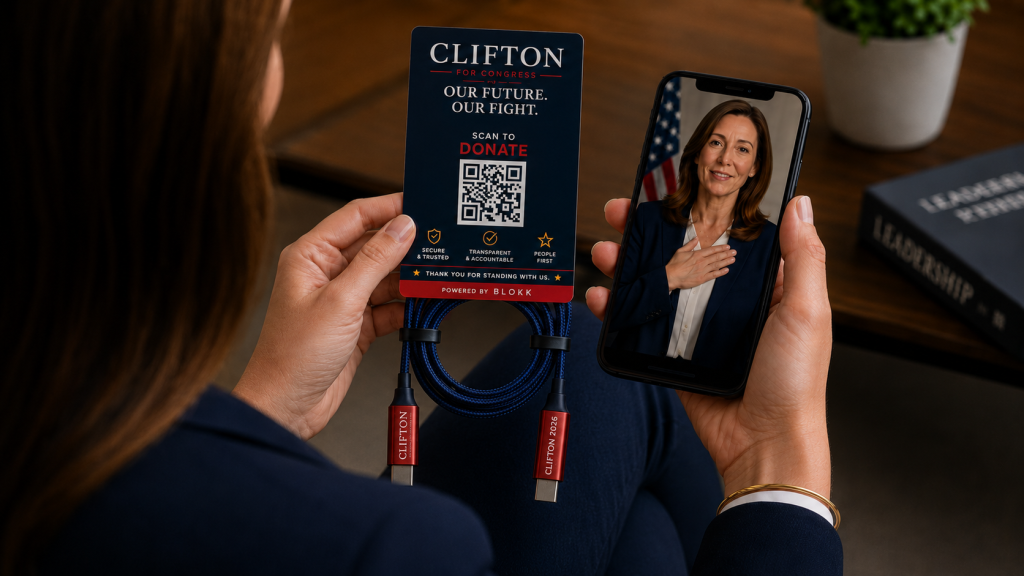
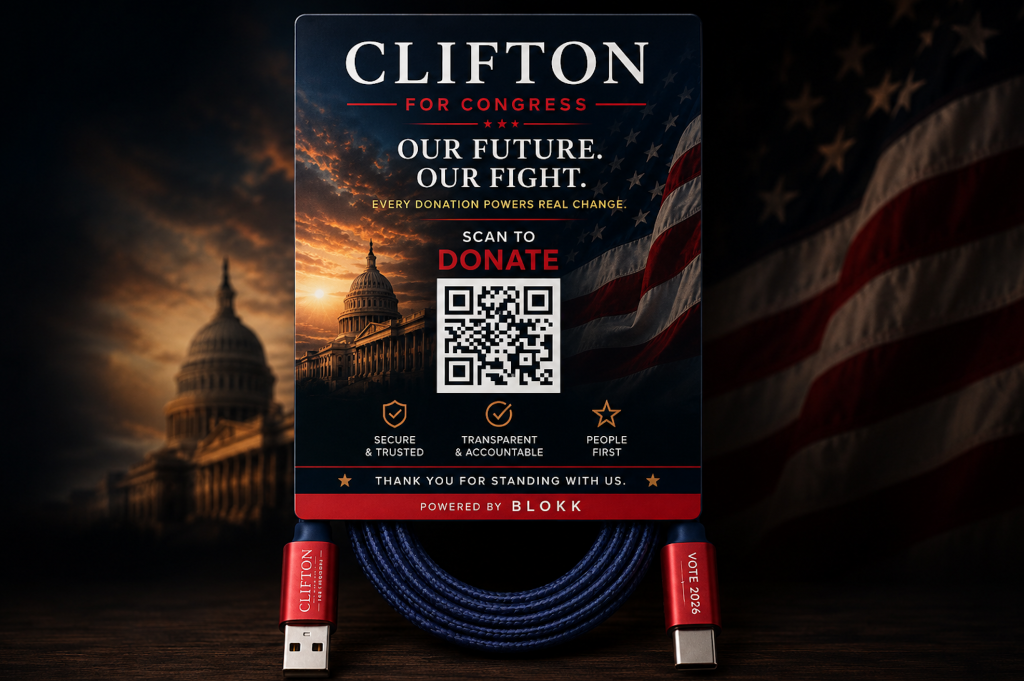
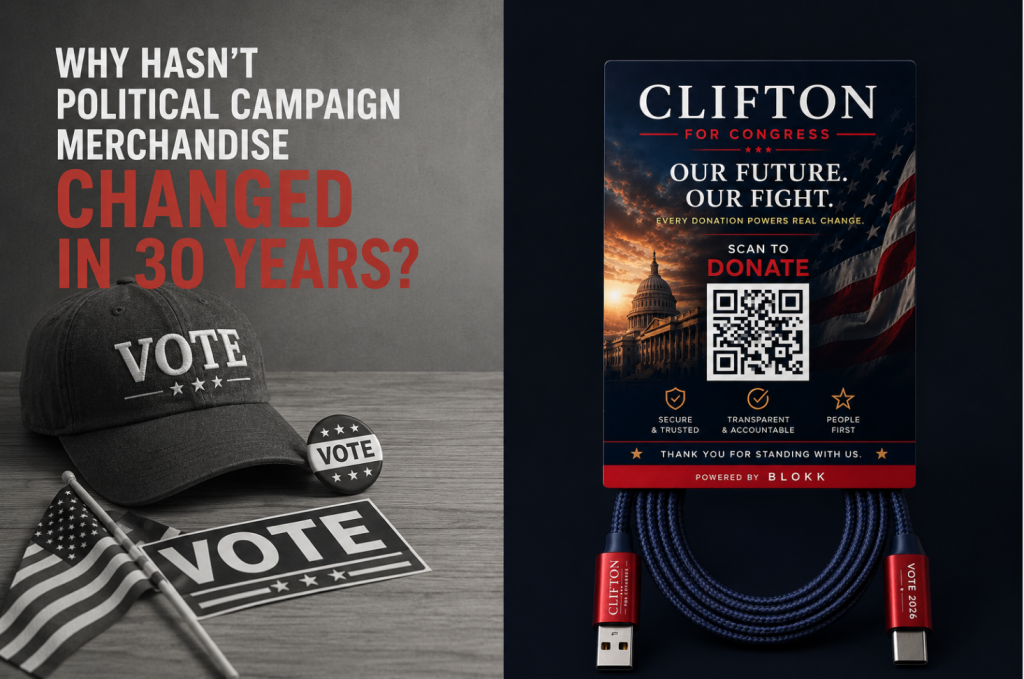
Now imagine that instead of a sign on the wall asking you to scan, you’re handed a charging cable. Attached to it is a simple activation prompt. No pressure, no friction—just a natural extension of something you already needed.
The QR code didn’t change.
The moment did.
And that changes everything.
What BLOKK does differently is align the physical and digital experience around moments like that. It introduces value first, at the exact point where attention already exists, and then creates a pathway to action that feels natural instead of forced. The scan isn’t the ask anymore. It’s the next step.
That’s a fundamentally different dynamic than most QR code strategies.
Because instead of asking customers to stop what they’re doing and engage with a brand, it meets them where they already are, solves a real problem, and builds the engagement from there.
It’s a subtle shift, but a powerful one.
When value comes first, attention follows.
When timing is right, friction disappears.
And when the experience feels relevant to the moment, the action becomes obvious.
This isn’t just about improving scan rates. It’s about rethinking how physical moments connect to digital behavior. QR codes are still the bridge—but they only work when there’s a real reason to cross it.
Right now, most brands are placing that bridge in empty space and wondering why no one walks across.
But when you anchor it to something real—something useful, something timely, something that actually matters in that moment—behavior changes almost instantly.
That’s when QR codes stop feeling like marketing… and start feeling like part of the experience.
Your customers aren’t ignoring your QR codes because they don’t understand them.
They’re ignoring them because nothing about the moment is asking them to care.
Fix the moment, and the scan takes care of itself.
And once you see it that way, it’s hard to go back to simply asking people to “scan this” ever again.