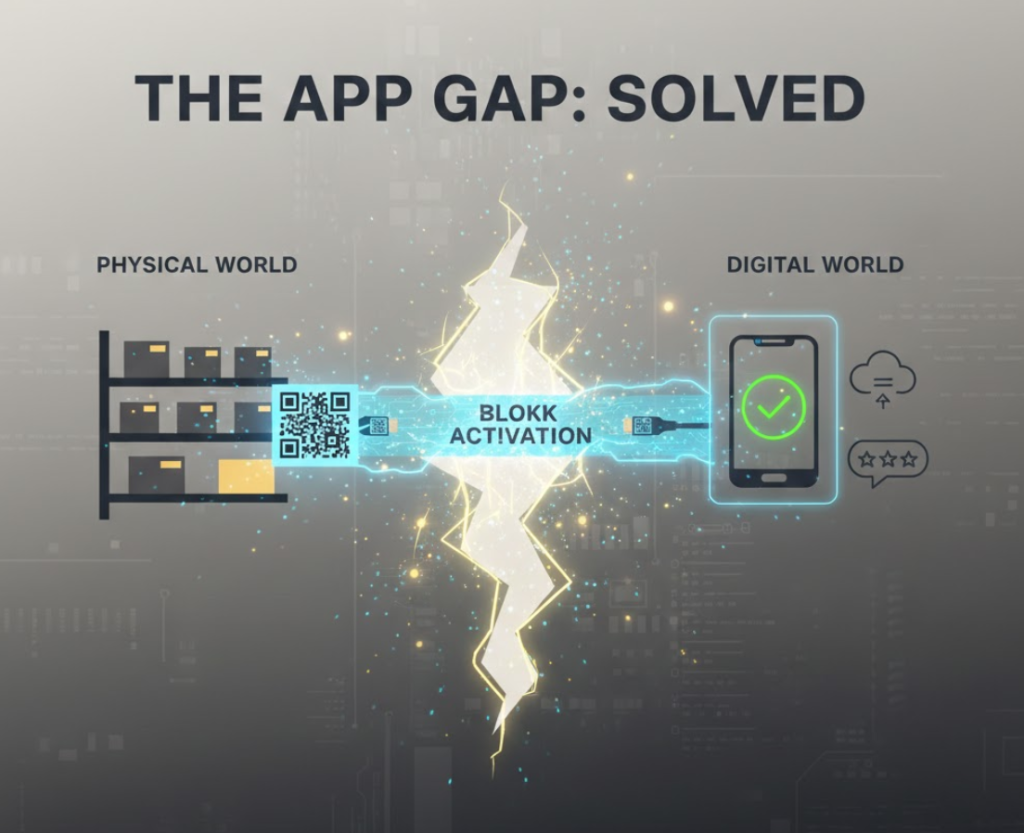

In the boardroom of a major health insurance carrier or medical enterprise, “Digital Transformation” is often viewed as an IT expense. But for the leadership teams tasked with managing the bottom line, the real cost isn’t the software—it’s the App Gap.
Every year, the U.S. healthcare system loses between $100 billion and $300 billion due to medication non-adherence and patient disengagement. This isn’t a medical failure; it’s a communication failure. If a patient doesn’t activate their portal, they don’t receive the alerts, the refills, or the care coordination that prevents a high-cost ER visit.
At BLOKK, we don’t view our hardware as a gift; we view it as Activation Infrastructure. We provide the physical bridge that ensures the millions spent on digital health tools actually result in patient adoption and cost avoidance.
1. The Financial Reality of the “App Gap”
For a health insurance carrier, a digitally inactive member is an expensive member. According to research from CareHive, patient non-adherence—often driven by a lack of digital engagement—is one of the largest drivers of avoidable inpatient spend. When a member is “offline,” the carrier loses all visibility into their health journey until they show up in the claims data as a high-cost medical event.
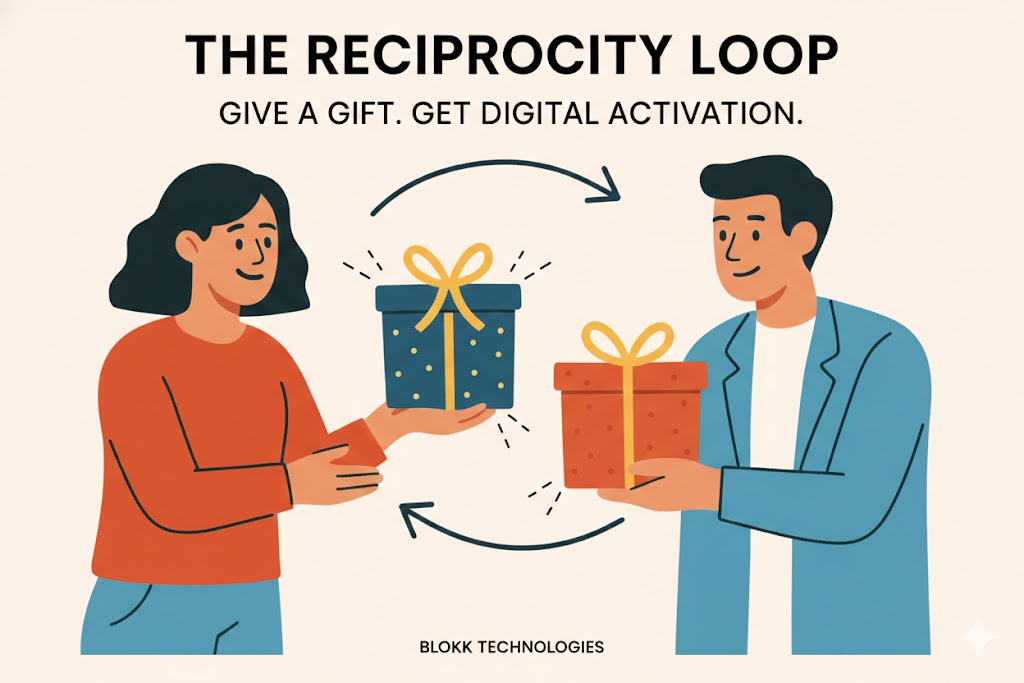
BLOKK infrastructure closes this visibility gap. By leading with a premium, physical “Good Faith” gift, we trigger the initial digital handshake. This isn’t a “marketing play”; it is a strategic maneuver to secure the first-party data necessary to manage risk and prevent the $30,000 hospital stays that dwarf the cost of a charging cable.
2. Infrastructure for First-Party Data and Attribution
In 2026, the reliance on third-party data is a liability. Privacy regulations and shifting consumer sentiment have made direct, first-party relationships the only sustainable path forward. As noted in our previous deep dive on Digital Attribution, you cannot manage what you cannot measure.
BLOKK serves as the attribution engine for the physical world. By placing unique digital triggers on high-quality hardware, we allow healthcare organizations to track exactly how a physical interaction (like a pharmacy visit or an enrollment kit) converts into a digital profile. As highlighted by Research World, the rising importance of first-party data in 2026 means that brands who don’t “own” their customer activation will be priced out of the market by rising acquisition costs.
3. Reducing Administrative Leakage
The cost of a manual process is a direct tax on a medical group’s margin. When patients don’t use portals, clinical staff are forced into high-cost manual tasks: phone calls for lab results, paper-based intake, and manual appointment scheduling.
According to the World Economic Forum, systemic inefficiency and “wasteful” healthcare spend account for a significant portion of global health budgets. BLOKK acts as the infrastructure that automates this intake. By using a physical gift to drive portal enrollment, we move patients into a self-service environment. This reduces administrative overhead, allowing clinical staff to focus on high-value care while the BLOKK bridge handles the “Last Mile” of digital onboarding.
4. The ROI of “Phygital” Enrollment
The ROI of a BLOKK activation program is measured in the Lifetime Value (LTV) of a digitally active member. Data from Hello Heart suggests that in 2026, the most effective cost-containment strategies focus on removing friction rather than “asking people to try harder.”
If a BLOKK cable costs less than $2.00, but results in a digital activation that prevents even a single 5% “leakage” in claims or saves 20% in documentation time (as seen in Penn Medicine ambient tech studies), the ROI is asymmetric. We aren’t just selling hardware; we are providing the mechanism for clinical and financial “straight-through processing.”
5. BLOKK: The Secure, HIPAA-Compliant Gateway
For healthcare organizations, infrastructure must be secure. Our digital triggers lead to a HIPAA-compliant “Gate,” ensuring that the physical hardware remains a safe tool for engagement. This approach aligns with Journal of AHIMA standards for health information integrity, providing a secure path for patients to self-identify without compromising sensitive data.
Conclusion: Stop Buying Ads, Start Building Infrastructure
The “App Gap” is a multi-billion dollar budget leak. You cannot solve a physical disengagement problem with more digital advertising. You solve it with infrastructure.
At BLOKK, we provide the physical foundation for digital health. We turn a premium charging cable into a strategic asset that secures first-party data, drives portal adoption, and stabilizes medical costs. It’s time to stop hoping for activation and start building the bridge to secure it.